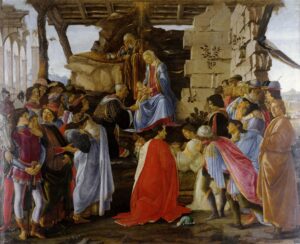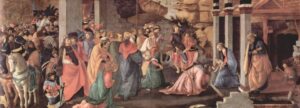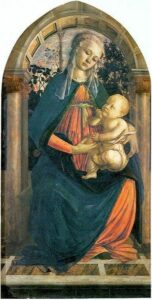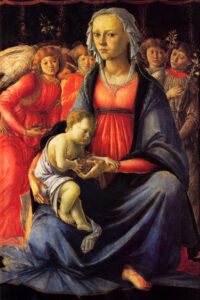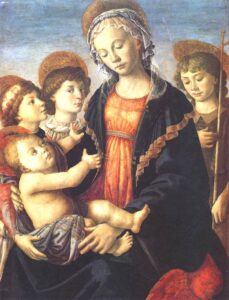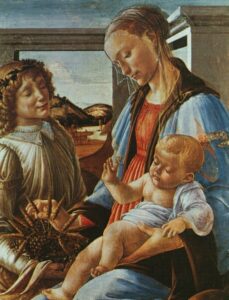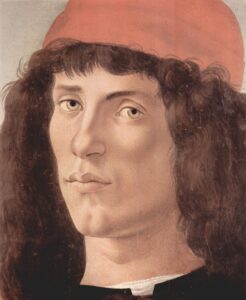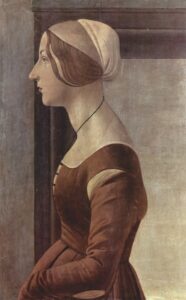





Commission of Adoration of the Magi
An important public commission that helped establish his reputation, featuring portraits of prominent Medici family members.

Sandro Botticelli (1445–1510)
Painter of ideal beauty – creator of the most beautiful women of the Renaissance.
Style: Early Renaissance. Lightness of line, delicacy of figures, blending mythology with spirituality.
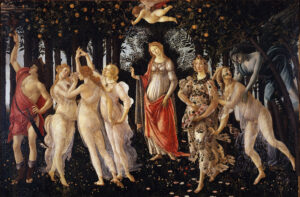
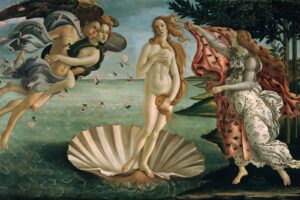
Key works: The Birth of Venus, Primavera — paintings about femininity, harmony, and divine gentleness.
Fun fact: In later life, he embraced religious asceticism and stopped painting mythological themes. He believed art should be modest and humble.
For today: Botticelli is an artist of the soul—his beauty is not kitsch but a pursuit of harmony much needed in the 21st century.
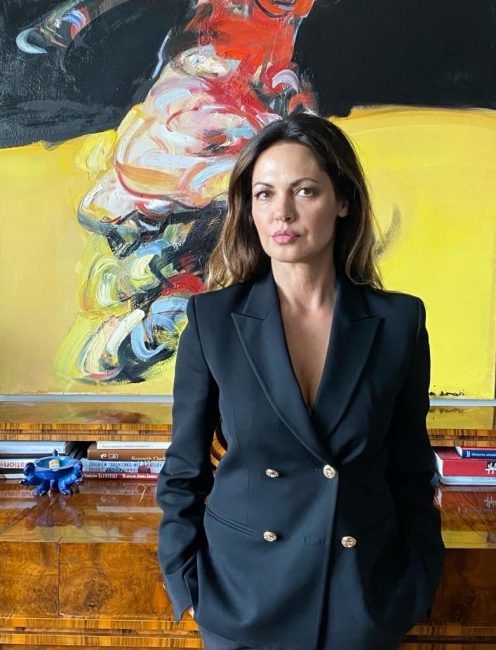 Joanna Piotrowska - Art Advisor & Marszand
Alessandro di Mariano di Vanni Filipepi, known as Sandro Botticelli (c. 1445 – 1510), was a prominent Italian Early Renaissance painter famed for works such as The Birth of Venus and Primavera. A protégé of Filippo Lippi and influenced by the Medici circle, his art combines linear grace with classical mythology, religious themes, and Neoplatonic philosophy. His reputation declined after his death but revived in the 19th century.
Botticelli was born in Florence into a modest family. Initially trained as a goldsmith, he apprenticed under Filippo Lippi where he developed his distinctive linear style.
By 1469, Botticelli had his own workshop. He gained significant commissions from Florentine patrons including the Medici family. His famed mythological paintings Primavera and The Birth of Venus date from the 1480s.
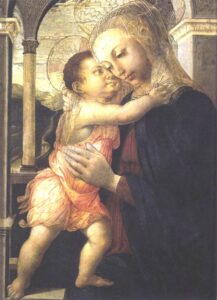
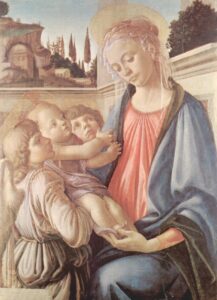
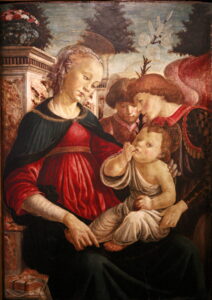
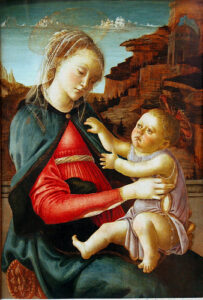
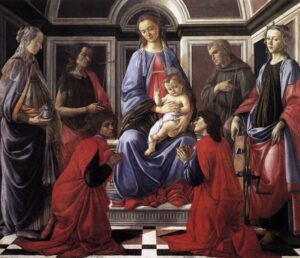
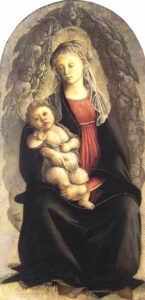
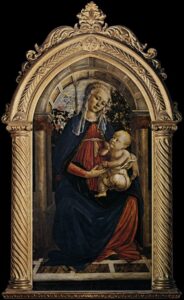
In 1481, Botticelli contributed to frescoes in the Sistine Chapel. He produced many religious altarpieces and Madonna paintings, often in the popular tondo format, displaying a graceful linear style.
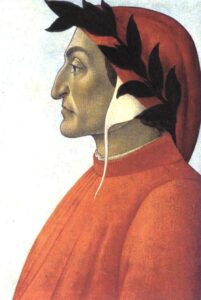
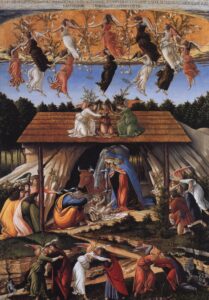
Later influenced by Savonarola’s preaching, Botticelli’s work took on a more austere tone. He focused on religious subjects and illustration projects such as those for Dante’s Divine Comedy. His production diminished after the 1490s.
Italian
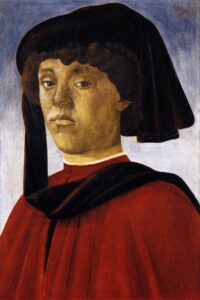
Painter, Portrait
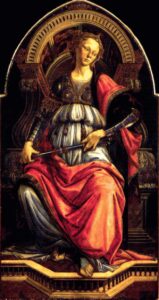
Mythology, religious subjects including Madonna and Child, portraits, allegory, Dante illustrations
An important public commission that helped establish his reputation, featuring portraits of prominent Medici family members.
Summoned by Pope Sixtus IV to contribute to the decoration of the newly completed Sistine Chapel in Rome.
By this time, Botticelli was an independent master, with pupils including the notable Filippino Lippi.
The Pre-Raphaelites brought renewed attention to Botticelli’s work, contributing to a lasting reassessment of his role in Renaissance art.