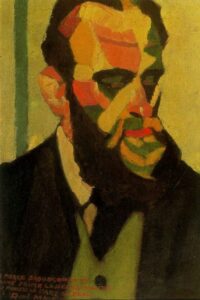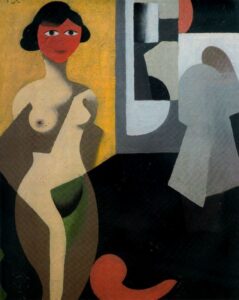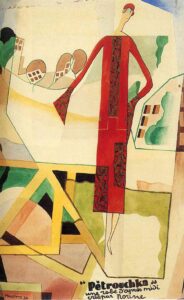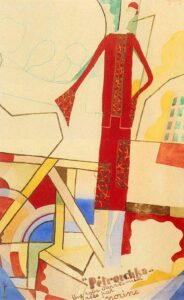


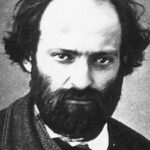


First Solo Exhibition
Held in Brussels, marking the start of his professional recognition despite initial poor reviews.

René Magritte (1898–1967)
The philosopher with a brush – painter of mystery in an everyday bowler hat.
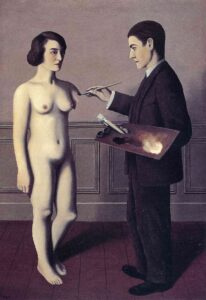
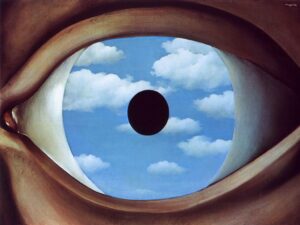
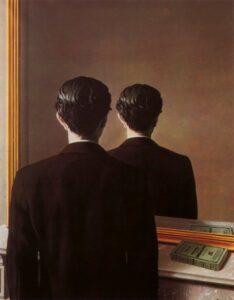
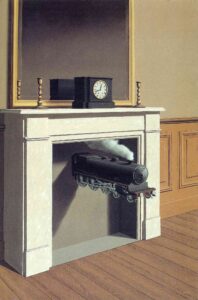
Style: Intellectual surrealism. He combined ordinary objects in extraordinary relationships – an apple covering a face, a pipe that “is not a pipe” (Ceci n’est pas une pipe).
Technique: Painted with precision and realism – in contrast to his bizarre subjects. A kind of “photorealism of the absurd.”
Life: Modest and quiet, he lived in Brussels. Unlike Salvador Dalí’s flamboyance, Magritte offered a cool, conceptual play with reality.
For today: Magritte is a master of context. His work resonates perfectly in the era of fake news, deepfakes, and post-truth – asking: what does it mean to “see” and to “know”?
 Joanna Piotrowska - Art Advisor & Marszand
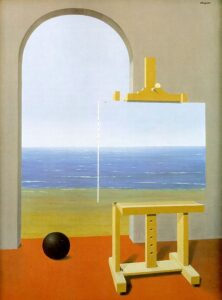
René Magritte was a Belgian surrealist artist renowned for depicting ordinary objects in unusual and thought-provoking settings. His art questions reality and representation, influencing pop art, minimalist and conceptual art. His famous works include 'The Treachery of Images', 'The Son of Man', and 'The Human Condition'.
Born as René François Ghislain Magritte in Belgium, he suffered the early loss of his mother. He studied at Académie Royale des Beaux-Arts in Brussels, initially painting in Impressionist and Cubist styles before developing a surrealist approach inspired by Giorgio de Chirico.
Magritte moved to Paris, befriended André Breton and became a leading surrealist. His first major surrealist paintings appeared in the late 1920s. Financial challenges led him to work in advertising in Brussels, yet he continued producing groundbreaking surrealist art.
He is known for thought-provoking juxtapositions and use of irony, exemplified in 'This is not a pipe'. Magritte's work combines the ordinary with the mysterious, using clear representational images to evoke existential questions on perception and reality.
Magritte's late work included both playful and philosophical paintings, incorporating recurring motifs like faceless figures, obscured faces, and windows as metaphors. He created many notable works such as 'Golconda' and 'The Empire of Light'.
Belgian
Painter, surrealism
Surrealism, familiar objects depicted in unfamiliar contexts, reality and representation, mystery, illusion, poetic imagery
Held in Brussels, marking the start of his professional recognition despite initial poor reviews.
Debuted in New York at Julien Levy Gallery, expanding his international presence.
Magritte's imagery began influencing pop art and conceptual art globally.
In Brussels, housing around 200 original works and preserving his artistic heritage.