



Jan Cybis Award
Recognized for outstanding achievement in Polish painting.
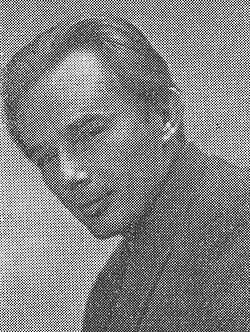
Jerzy Tchórzewski (1928–1999)
Painter of spiritual visions and anxieties, representative of the so-called “metaphysical school.”
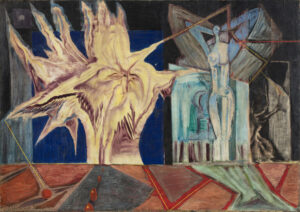
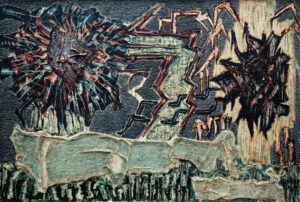
Style and technique: He painted with his own language of organic forms, often resembling volcanoes, lava, and rocks – using intense colors, dynamic chiaroscuro, and painterly textures. He mainly used oil paints. His paintings contain something of nature, apocalypse, and archetypes.
Themes: Transformations, inner tensions, the drama of existence. His works are like landscapes of the soul in eruption. They were called “paintings of inner cataclysm.”
Secrets and trivia:
He was closely connected to Tadeusz Kantor and the Krakow Group, though his painting was more serious, even mystical.
His works have a strong symbolic and metaphorical character – they are paintings to be experienced rather than analyzed.
Though not a media star, he fascinated collectors – his works today are rare and sought after.
What does he tell us today? That art does not need to be loud to be great. Tchórzewski is an example of a deeply authentic painter – without calculation, fully devoted to the invisible.
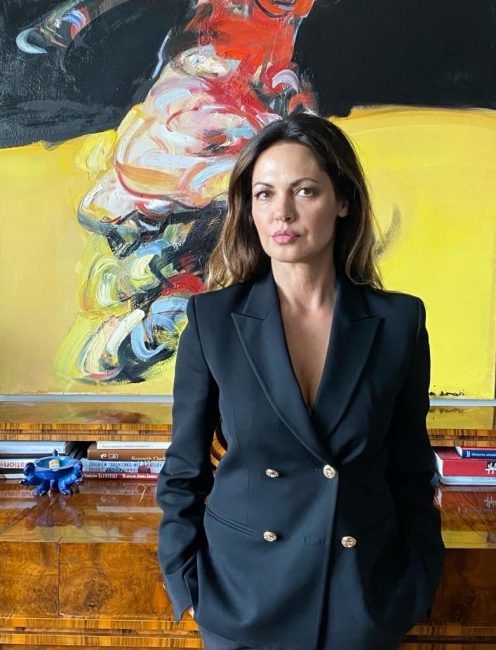 Joanna Piotrowska - Art Advisor & Marszand
Jerzy Tchórzewski was a Polish painter, graphic artist, and poet associated with the Krakow Group II and known for his transition from surrealist-influenced figurative painting to expressive abstraction. He was also a pedagogue at the Academy of Fine Arts in Warsaw and a member of the Home Army during WWII.
Born in Siedlce in 1928, he fought in the Home Army during 1943-1944. He studied painting from 1946-1951 at the Academy of Fine Arts in Krakow and was linked early to the Krakow Group II.
Initially painted figuratively under Surrealist influences. Later, after the National Exhibition of Young Plastic Arts in Arsenal (1955) where he received an award, he shifted to expressive abstract painting. Relocated to Warsaw and started teaching at the Academy of Fine Arts in 1954, leading the painting studio in the Graphics Faculty. He became a professor in 1987 and retired in 1998.
Besides visual arts, Tchórzewski wrote poetry. His posthumous poetry collection 'Wieczny początek gwałtownej chwili' covering 1988-1996 was published in 2003. He also authored memoirs recounting his experiences from 1928 to 1957.
In 1984, he was awarded the Jan Cybis Award, a prestigious Polish painting prize.
Polish
Graphic Artist, Graphics, Painter, Poet
Figurative painting influenced by Surrealism, later expressive abstract painting, poetry
Recognized for outstanding achievement in Polish painting.