



Gold Cross of Merit (Poland)
Awarded for significant contributions in the field of culture and arts.
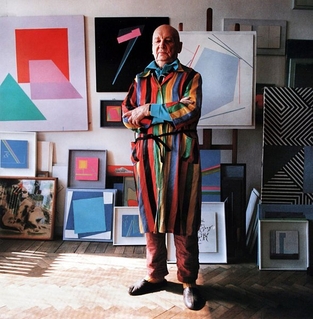
Henryk Stażewski (1894–1988)
Father of Polish abstraction. He combined geometry with freedom.
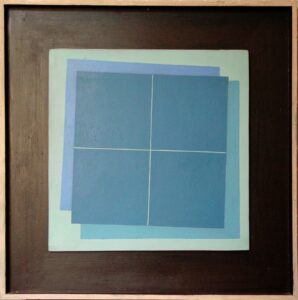
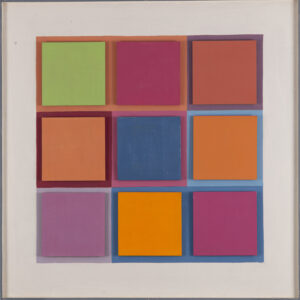
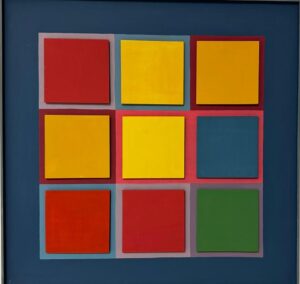
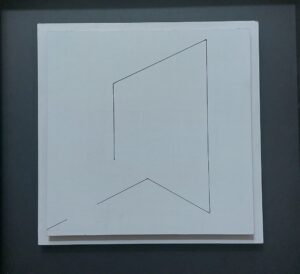
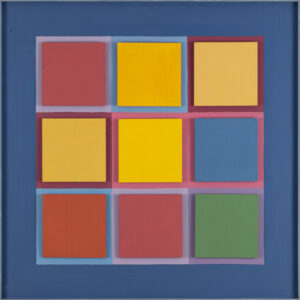
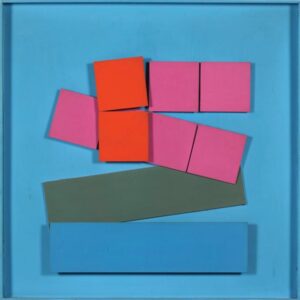
Style: One of the first constructivists in Poland. Used simple forms—squares, lines, stripes—creating pure, intellectual art full of energy.
Life: During the communist era (PRL), he remained faithful to the avant-garde despite ideological pressures. Mentored young artists in the 1960s and 1970s.
Curiosity: Lived in the famous M3 apartment at the House of the Plastic Artist in Warsaw — this flat became an informal gallery where the independent art scene gathered.
For today’s creators: Stażewski teaches that even the most minimalist form can express the spirit of freedom and resistance against banality.
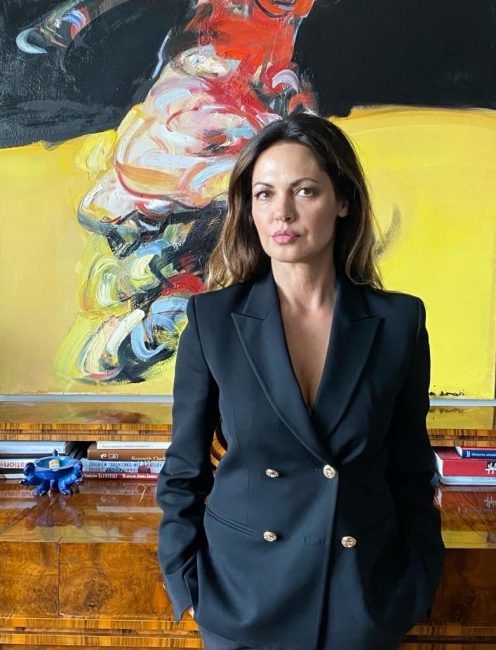 Joanna Piotrowska - Art Advisor & Marszand
Henryk Stażewski was a prominent Polish painter associated with avant-garde movements and a key representative of constructivism. Throughout his artistic career, he devoted himself to geometric abstraction. He studied at the Warsaw School of Fine Arts and was involved with several avant-garde groups including Polish Expressionists, Formists, Blok, Praesens, and the 'a.r.' group. Stażewski contributed significantly to the development of Polish constructive and abstract art and was active internationally through exhibitions and artistic exchanges.
Born in Warsaw, Stażewski studied at the Warsaw School of Fine Arts (1913–1919) under Stanisław Lentz. He became affiliated with early Polish avant-garde movements such as the Polish Expressionists and later Formists.
Stażewski was a founding member of the groups Blok, Praesens and a.r., which were instrumental in promoting Cubism, Constructivism, and Suprematism in Poland. He contributed to avant-garde magazines 'Blok' and 'Praesens' that maintained international contacts with groups such as Dutch De Stijl.
His works primarily focus on geometric forms and abstraction, showing influence from artists like Piet Mondrian and Theo van Doesburg. These are reflected in his paintings and contribution to the Polish constructivist movement.
From the 1960s, Stażewski participated in spatial form biennials and collaborated with other notable artists like Edward Krasiński and Tadeusz Kantor. He co-founded the Foksal Gallery in Warsaw. His works are in major Polish museums including the Museum of Upper Silesia in Bytom, the Zachęta National Gallery of Art, and the Museum of Art in Łódź.
Polish
Avant-garde artist, Constructivist, Painter, Painting
Constructivism, Geometric Abstraction, Avant-garde Art
Awarded for significant contributions in the field of culture and arts.
Awarded on the occasion of the 10th anniversary of the Polish People's Republic for cultural merit.
An honorary badge recognizing significant achievement in national culture.