




Arnold Bode Prize, Kassel
Acknowledged for his contributions to contemporary art in Germany and internationally.
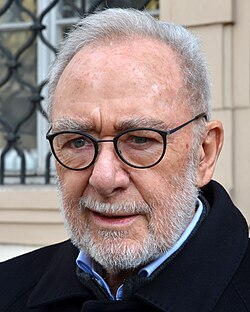
Gerhard Richter (b. 1932)
The chameleon of contemporary art – blending photography, abstraction, and emotional detachment.
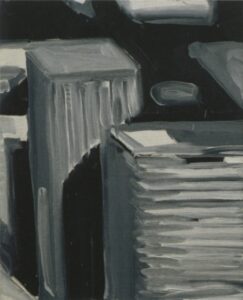
Style: Difficult to categorize. He paints hyperrealistic images and completely abstract canvases—often within the same series.
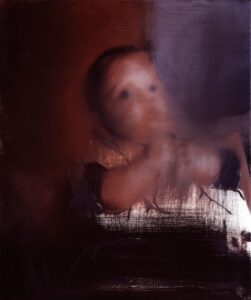
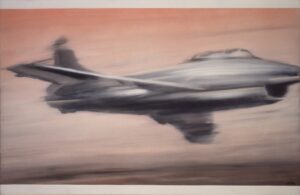
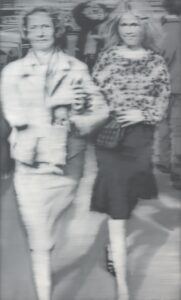
Technique: In his famous “blurred” paintings, he first paints realistic scenes and then smears them with a squeegee. In his abstractions, he uses paint as a building material—layer by layer.
Trivia: He regularly destroys unsuccessful paintings. He claims that risk is the most important aspect of art.
Why it matters today: Richter is a master of controlled chance. In an era tired of style, he shows that variability is a strength—not a weakness.
 Joanna Piotrowska - Art Advisor & Marszand
Gerhard Richter is a leading German contemporary visual artist known for his diverse styles encompassing abstract paintings, photorealistic paintings based on photographs, glass art, and conceptual works. Widely regarded as one of the most important and influential living painters, Richter’s work explores the nature of perception, memory, and the complexities of history through innovative techniques.
Born in Dresden and raised in the Upper Lusatian countryside, Richter showed early interest in art, apprenticing as a sign painter before studying at the Dresden Art Academy. After escaping East Germany, he furthered his education at Kunstakademie Düsseldorf under influential teachers and alongside contemporaries such as Sigmar Polke.
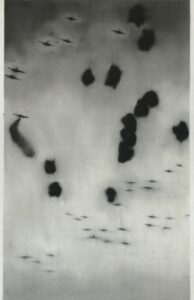
In the 1960s, Richter became known for his photo-paintings—works based on black-and-white photographs featuring blurred effects—a technique he developed to question reality and representation. He also created abstract and conceptual works exploring chance, color, and form.
Richter’s oeuvre includes iconic cycles like '48 Portraits', political works such as the '18 October 1977' series on the Red Army Faction, and deeply contemplative pieces reflecting on memory and trauma including paintings about Dresden’s bombing and the Holocaust. His 'Birkenau' series relates to Auschwitz.
He ventured into abstract color charts, large stained glass windows like the one in Cologne Cathedral, fluorescence from scientific phenomena, and innovative techniques involving squeegees. His experimental approach blends painterly methods with conceptual rigor.
German
contemporary painting, Painter, Visual Artist
Abstract art, photorealism, conceptual art, capitalist realism, portraits, landscapes, history, memory, political and scientific themes
Acknowledged for his contributions to contemporary art in Germany and internationally.
An internationally recognized honor for outstanding achievement in the arts.
One of the world’s most prestigious art prizes presented for lifetime achievement.
Awarded at the world-renowned Venice Biennale for artistic excellence.