




First Accepted Salon Works
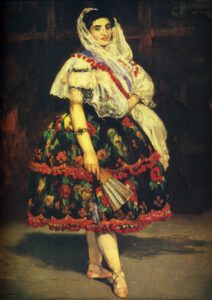
Manet's portraits of his parents and The Spanish Singer were accepted; the latter gained popularity among Salon-goers.
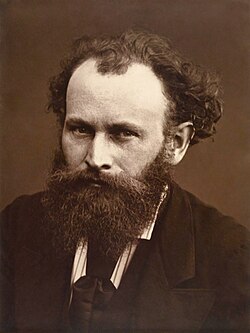
Édouard Manet (1832–1883)
The father of modernism – the first to look at modern life without a costume.
Style: He blended classical technique with contemporary subject matter. He painted everyday life, Parisian streets, and figures that seemed straight out of a modern newspaper.
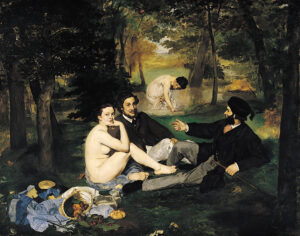
Key works: Luncheon on the Grass, Olympia – paintings that caused scandal by showing nudity without mythological excuses.
Technique: Flat areas of color, strong outlines, compressed perspective – innovative and dynamic.
Fun fact: Though he considered himself a classicist, Manet constantly challenged the rules of classicism and sparked heated debates in art salons.
Why he matters today: Manet was a realist of his time. He proved that painting could be like photography – immediate, provocative, and rooted in the now.
 Joanna Piotrowska - Art Advisor & Marszand
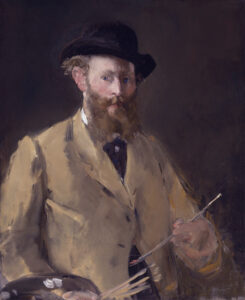
Édouard Manet was a French modernist painter and a pivotal figure in the transition from Realism to Impressionism. His controversial works, including 'The Luncheon on the Grass' and 'Olympia', challenged academic conventions and paved the way for modern art. Manet's informal style, use of modern subjects, and innovative techniques deeply influenced the art world.
Born into an affluent family with political ties, Manet initially pursued a naval career before turning to painting. He studied under Thomas Couture and was influenced by Dutch and Spanish masters like Frans Hals and Velázquez. Manet's early works portrayed contemporary subjects, distancing from religious and historical genres.
Manet's break-through works 'Music in the Tuileries' and 'The Luncheon on the Grass' stirred significant controversy for their subjects and styles, defying classical norms with modern social scenes and unconventional compositions. His candid portrayal of nudity and urban life shocked critics but gained admiration among progressive artists.
Although influenced by and connected to Impressionists like Monet and Morisot, Manet preferred exhibiting at the official Salon rather than Impressionist exhibitions. His style integrated loose brushwork, strong outlines, and sometimes flatness, emphasizing the painted surface and modern perspectives.
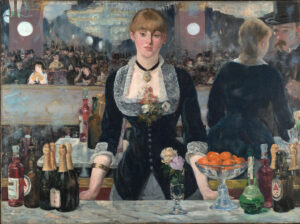
Manet's later years were marked by illness and partial paralysis due to syphilis. He produced many still lifes and scenes from social venues like cafes and bars that depicted the bohemian and bourgeois life, reflecting his deep observation of Parisian society.
French
Painter, Painting, Printmaker
Modern life, contemporary people, social scenes, urban life, consequence of war, society and culture of 19th-century Paris
Manet's portraits of his parents and The Spanish Singer were accepted; the latter gained popularity among Salon-goers.
Civil exhibition for works rejected by Paris Salon; 'The Luncheon on the Grass' caused great controversy but increased Manet's notoriety.
The provocative painting of a nude prostitute caused scandal but was championed by avant-garde artists and critics like Emile Zola.
Recognized by the French government for his contributions to art.