




Exhibition at Zachęta National Gallery of Art, Warsaw
Solo exhibition highlighting his abstract expressionist works
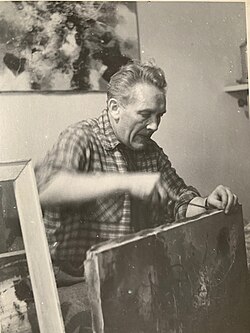
Alfred Lenica (1908–1977)
A surrealist painter and pioneer of geometric abstraction
Technique: Lenica combined surrealist imagination with cubist, geometric precision. His paintings often featured complex compositions where abstract elements intertwined with organic shapes.
Breakthrough: A pivotal moment in his artistic career came during his time in occupied Kraków, where he connected with progressive artists such as Tadeusz Kantor, Kazimierz Mikulski, and Tadeusz Brzozowski. His work evolved toward abstraction and was exhibited at prestigious international shows.
Artistic life: Lenica continued to explore informel painting and returned to experimenting with artistic materials. He created large-format oil paintings using the dripping technique – freely pouring and splashing paint onto the surface. He was influenced by Tachisme, informel, and surrealism, which he combined into a distinctive and easily recognizable personal style.
Fun fact: Lenica was among the first Polish artists to gain international recognition in surrealist and abstract circles. He exhibited at the Zachęta Gallery, with the Kraków Group, and participated in most of the famous plein air gatherings in Osieki near Koszalin.
For today: His work serves as a bridge between surrealism and the dynamic play of abstract, non-representational color fields, spots, lines, and compositions. It continues to inspire artists seeking new forms of expression.
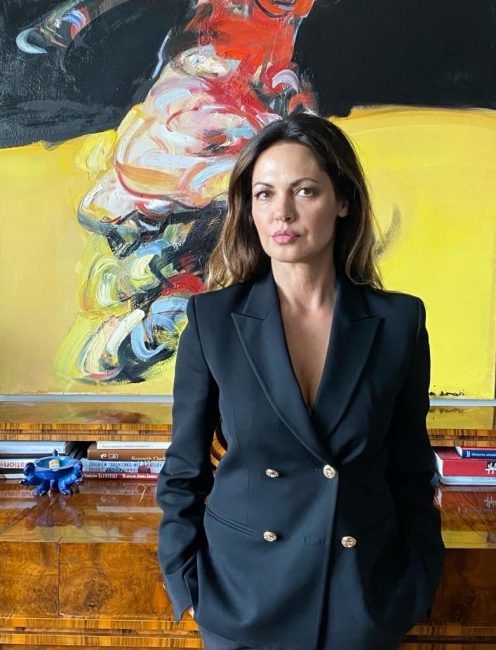 Joanna Piotrowska - Art Advisor & Marszand
Alfred Lenica was a Polish painter known for his abstract, surreal, and expressive style. Beginning with figurative works influenced by cubism, he transitioned to abstract and tachisme styles after WWII. He was active in avant-garde art movements and created socially and politically engaged artworks during the socialist realism period.
Born in Pabianice in 1899, Lenica initially studied law and economics at Adam Mickiewicz University while also studying music. He pursued painting studies under Piotr Kubowicz and Adam Hannytkiewicz in Poznań.
In the 1930s, Lenica painted figurative works such as still lifes and landscapes influenced by cubism. WWII was pivotal, exposing him to avant-garde circles in Kraków. Post-war, he co-founded the 4F+R avant-garde group and shifted towards abstraction and tachisme, creating large oil paintings using industrial materials.
During the 1950s socialist realism period, Lenica produced realist, socially engaged paintings but continued experimenting with collage and monotype. By mid-1950s, he evolved a distinctive style blending tachisme, surrealism, informel, and dripping techniques.
Lenica undertook international travels and exhibited widely, including murals for the UN in Geneva. In 1973, he created the 'Chile, Chile' cycle reflecting his trip and the political turmoil in Chile. His works were shown in major Polish and international galleries and museums.
Polish
Painter, Painting
abstract art, surrealism, informel, tachisme, political and social themes, large-format oil paintings, use of industrial paints and lacquers
Solo exhibition highlighting his abstract expressionist works
Showcased works contributing to European abstract art
Part of Polish post-war avant-garde art exhibitions
Major Polish gallery exhibition reflecting his mature style


