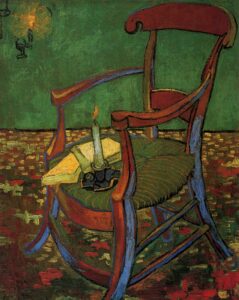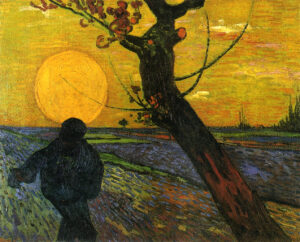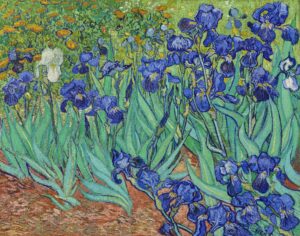




Exhibition at Les XX, Brussels
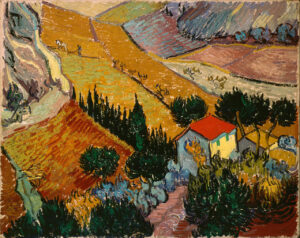
Exhibited ten paintings; his work caused both admiration and controversy among avant-garde circles.

Vincent van Gogh (1853–1890)
An artist of the heart – mad and brilliant, who walked through life with empty pockets but a soul full of fire.
Style: Expressive Post-Impressionism – short, rhythmic brushstrokes, intense colors, dramatic light. He didn’t paint what he saw, but what he felt.
Life: Just a few years of intense creativity, over 800 paintings. He struggled with depression, loneliness, and poverty. Sold only one painting during his lifetime.
Curiosity: Cut off his ear after a fight with Gauguin. Died from a gunshot wound, likely a failed suicide attempt.
For us today: Van Gogh is a symbol of passion, sacrifice, and authenticity. His letters to his brother Theo are spiritual literature. A perfect patron for independent, underappreciated, and stubborn artists.
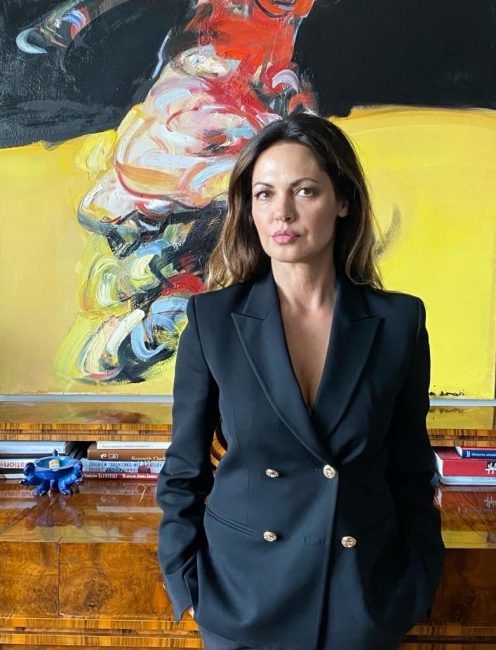 Joanna Piotrowska - Art Advisor & Marszand
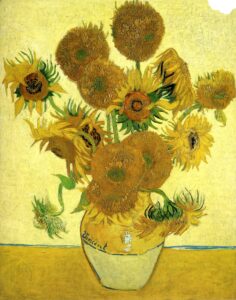
Vincent Willem van Gogh was a Dutch Post-Impressionist painter whose intensely expressive use of color and dramatic brushwork became hugely influential in modern art. Despite producing about 2,100 artworks in just over a decade, including 860 oil paintings mostly in his final years, he struggled with mental health issues and poverty. He is famous for works such as Sunflowers, The Starry Night, and Bedroom in Arles. His work was little appreciated in his lifetime but later gained worldwide acclaim.
Born in Zundert, Netherlands to an upper-middle-class family, Van Gogh exhibited early artistic interest but suffered from mental instability. He worked as an art dealer and missionary before fully committing to painting in 1881, supported mainly by his brother Theo.
Van Gogh's early works in the Netherlands show somber earth tones and peasant themes. Moving to Paris in 1886, he encountered Impressionists and adopted a lighter palette, eventually developing a bold, emotive style marked by vibrant color and dynamic brushwork encoding his psychological state.
In 1888, he moved to Arles, southern France, seeking an artist community. Here he created hundreds of paintings with luminous colors, including the Sunflowers series and iconic scenes like The Night Café. His mental health deteriorated, culminating in his self-mutilation episode.
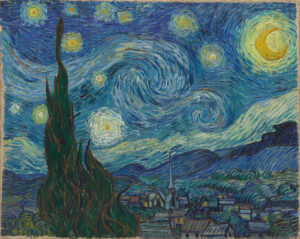
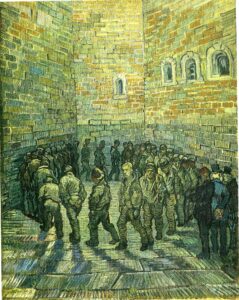
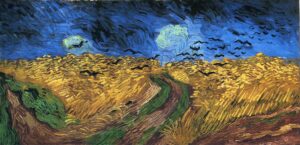
Van Gogh spent time in asylums, notably in Saint-Rémy, where he produced many notable works including The Starry Night. He moved to Auvers-sur-Oise in 1890 near his brother and doctor Paul Gachet. Struggling with mental illness, he died from a self-inflicted gunshot wound at age 37.
Dutch
Painter, Painting
Post-Impressionism, landscapes, still lifes, portraits, self-portraits, mental health struggles, expressive brushwork
Exhibited ten paintings; his work caused both admiration and controversy among avant-garde circles.
Helped inspire Fauvist movement, boosting Van Gogh's posthumous reputation.
Work exhibited at Gallery 291, New York, later displayed at the renowned Armory Show in 1913.